
Grow Sustainably with
Bio-network
Bio-network


Partnership
Program
Join the Bio-SIP Partnership Program and take your business to the next level with sustainable building solutions. As a partner, you’ll unlock benefits like our Rebate Scheme, where increased engagement brings greater savings, and a Dedicated Account Manager offering expert, personalized support.
Plus, you’ll gain access to Exclusive Leads to grow your customer base and comprehensive Training and Accreditation to enhance your technical expertise. With Marketing Collaboration, we’ll help you promote eco-friendly projects through co-branding opportunities. Grow sustainably and profitably with Bio-SIP!
Partner with Bio-SIP™
Partner with Bio-SIP™


- Can Low-Carbon sustainable building materials Help Us Build Better Affordable Homes?
 Why the materials we choose could be just as important as the way we design and deliver housing When we talk about solving the housing crisis, the conversation often focuses on how many homes we need to build.
 - Insulated Garage: A Smarter Way to Create More Space at Home
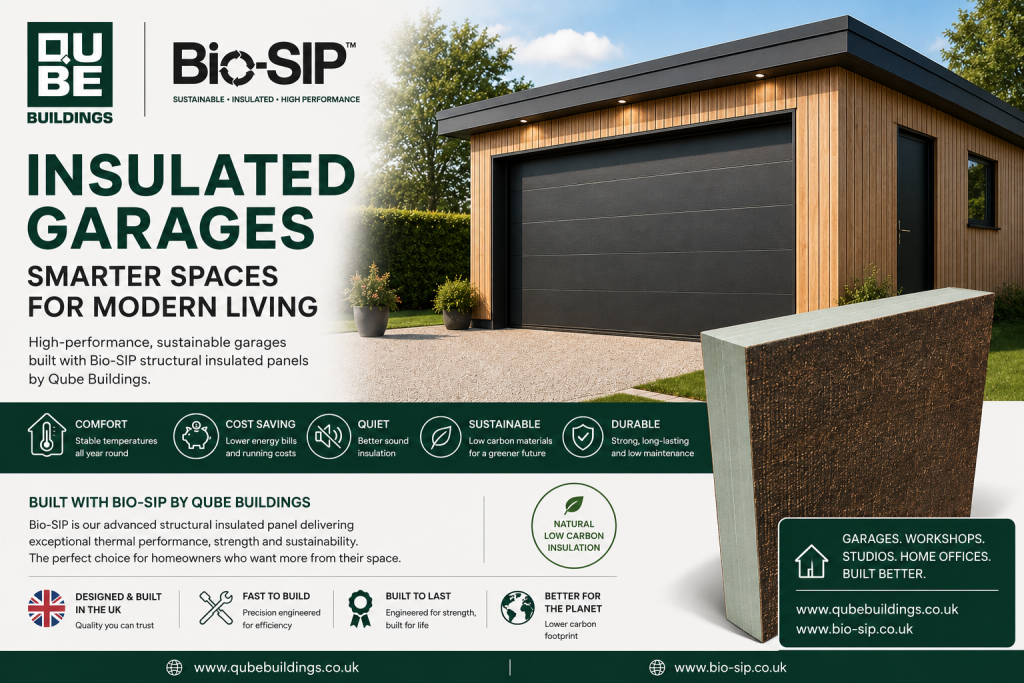 For many homeowners, the traditional garage is becoming something more than somewhere to park a car. That is why insulated garage are becoming an increasingly attractive option for homeowners looking to make better use of the space around their property. A modern garage can be a workshop, home gym, hobby room, home office, studio, storage space or a combination of all of these. But if the building is cold, damp, difficult to heat and uncomfortable for much of the year, it can quickly become a space that is used less than it should be. At Bio-SIP, we believe… Read more: Insulated Garage: A Smarter Way to Create More Space at Home
 - UK Construction Products Reform White Paper: Why the Industry Finally Needs System-Led Innovation
 The UK Government’s new Construction Products Reform White Paper marks one of the most significant shifts in construction regulation and industry direction in decades. For many years, the construction sector has struggled with fragmented supply chains, slow innovation, rising costs, poor productivity and increasing pressure to deliver safer, more sustainable buildings. While regulation is essential, the industry has often lacked a joined-up strategy that balances safety, innovation, affordability and long-term resilience. The White Paper is an important step forward because it finally recognises that the future of the built environment cannot rely solely on traditional construction methods and… Read more: UK Construction Products Reform White Paper: Why the Industry Finally Needs System-Led Innovation